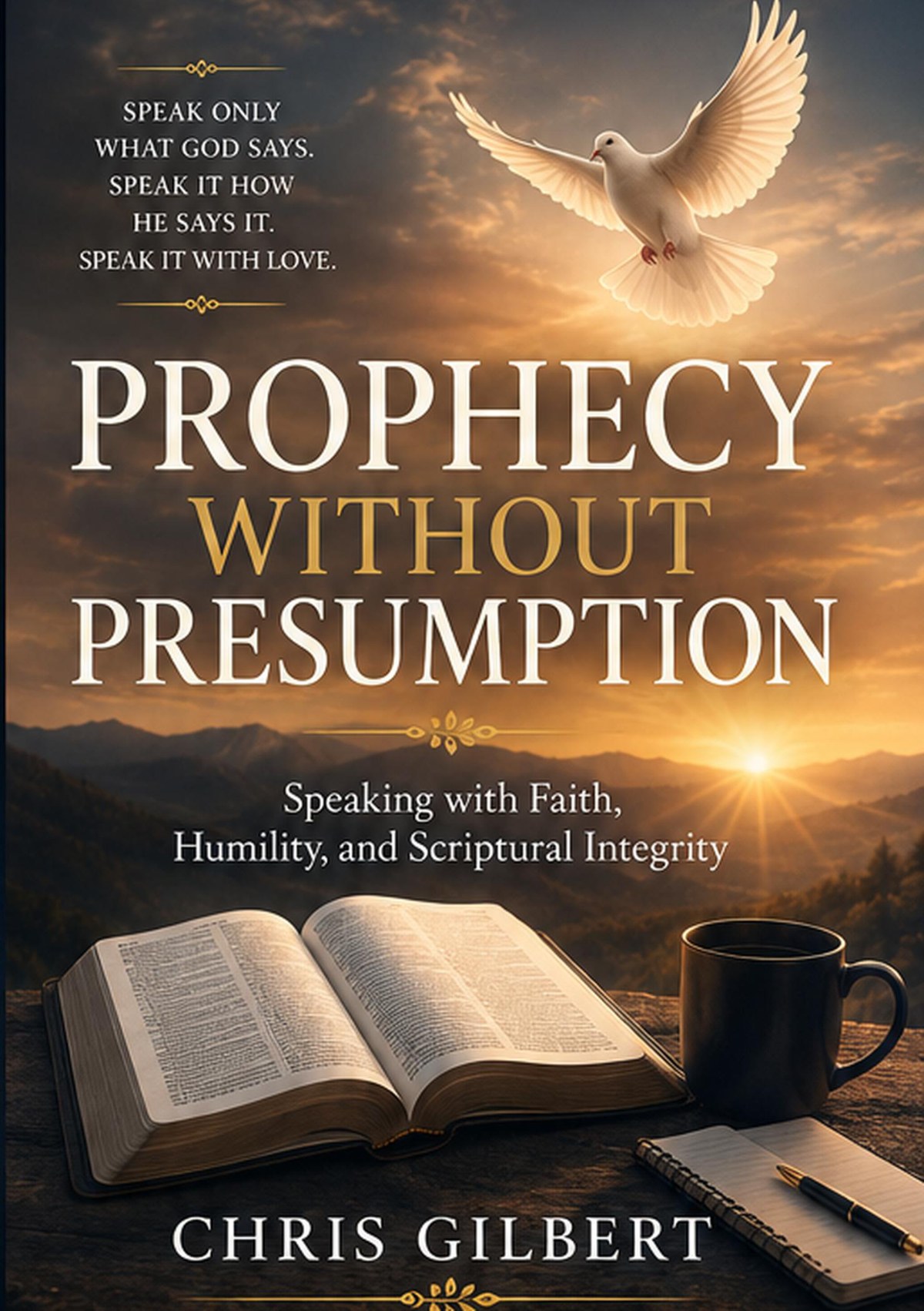
Prophecy Without Presumption
Speaking with Faith, Humility, and Scriptural Integrity
Chris Gilbert · 217 pages
Speak only what God says, as He says it, and with love. This book trains prophetic ministry under Scripture, humility, and accountability — faith without claiming more than God has given.
GH₵129.00
WhatsApp to a pastor
Pastor / prayer leader —

This week’s theme: Humility.

*Prophecy Without Presumption* by Prophet Chris Gilbert (Spirit Impart Ministries).

Speak only what God says, as He says it, and with love. Faith does not need to claim more than God has given.

Free sample on the page. Full edition unlocks after MTN MoMo in Ghana or Liberia.

https://lumenpressbooks.com/books/prophecy-without-presumption
Pulpit line
This week we commend Prophecy Without Presumption by Prophet Chris Gilbert — Spirit Impart Ministries. Free sample at lumenpressbooks.com. Pay with MTN MoMo.
Sample
Read or write a review of this book
Introduction
Faith Without Claiming More Than God Has Given
Key Texts
1 Thessalonians 5:19-22; 1 Corinthians 14:29-33; 1 John 4:1; James 1:19
Presumption begins when we claim more than we have been given. An impression becomes an interpretation; the interpretation becomes a certainty; the certainty becomes a command; and the command is defended with the name of God. The entire progression can occur in a few moments. Spiritual maturity slows that progression and introduces checkpoints where Scripture, prayer, character, community, evidence, and love can do their work. The New Testament combines openness to prophecy with explicit commands to weigh it. Paul urges believers to desire spiritual gifts while insisting that prophetic speech be judged and worship remain orderly. First Thessalonians warns against despising prophecies and immediately says to test everything. First John tells believers not to believe every spirit. Testing is therefore not the opposite of faith; it is part of biblical faithfulness. Christian scholarship differs on the continuation, nature, and authority of present-day prophecy, but responsible discussion repeatedly returns to the supremacy of Christ, the authority of Scripture, the purpose of edification, and the need for careful interpretation (Carson, 2019; Fee, 2014; Grudem, 2000; Keener, 2016; Thiselton, 2000). This book does not require every reader to adopt the same continuationist conclusion. Its practical claim is that wherever prophetic ministry is practiced, it should be accountable to these biblical boundaries. The central framework of this volume can be summarized in six actions: hear, hold, test, submit, speak, and review. Hear without forcing. Hold without panic. Test by Scripture and fruit. Submit to appropriate community an
The full edition unlocks in your library after payment.