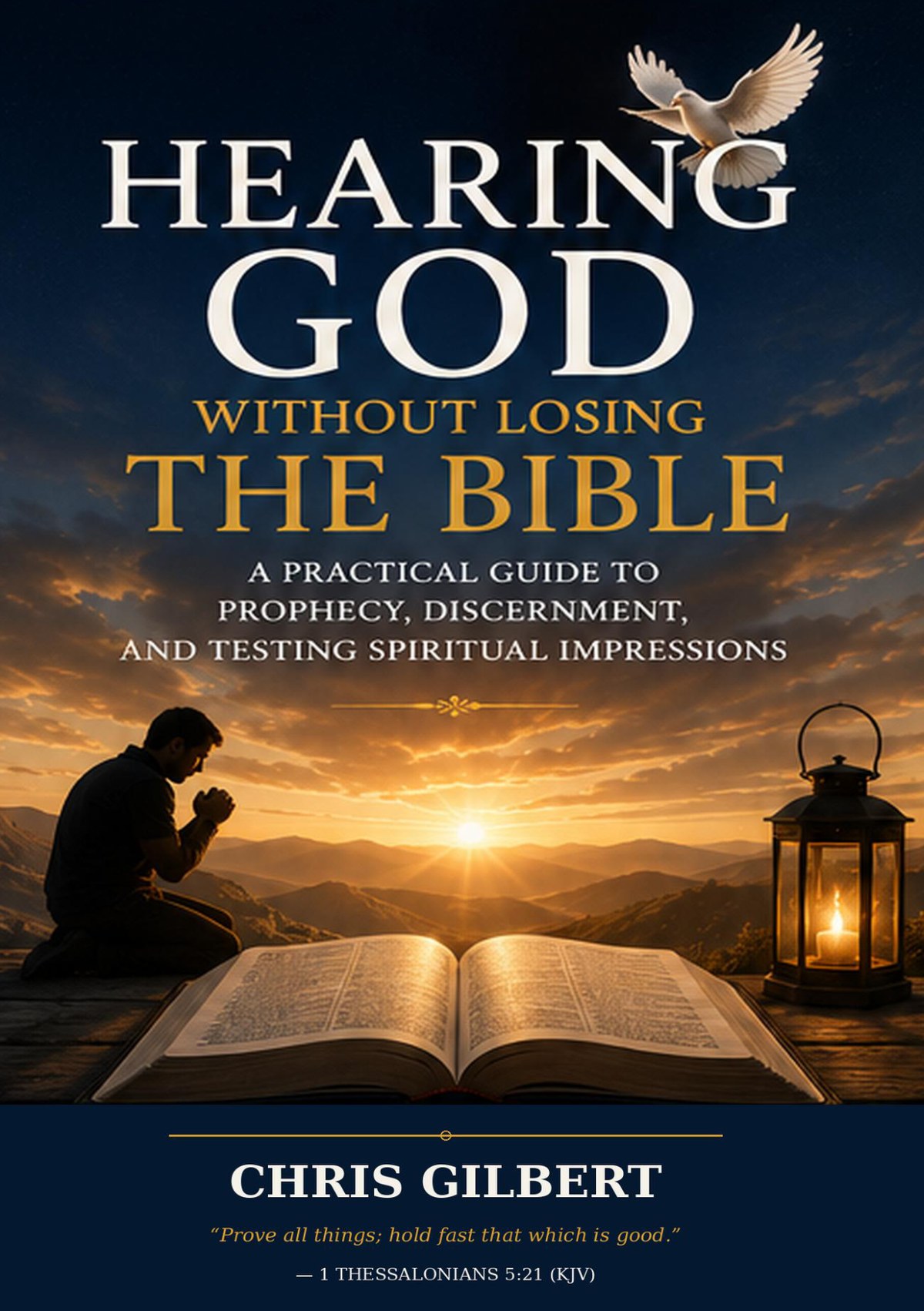
Hearing God Without Losing the Bible
A Practical Guide to Prophecy, Discernment, and Testing Spiritual Impressions
Chris Gilbert · 233 pages
Prove all things; hold fast that which is good. A Scripture-first grammar for prophecy, impressions, and discernment — so the Spirit is welcomed and the Bible is never displaced.
GH₵139.00
WhatsApp to a pastor
Pastor / prayer leader —

This week’s theme: Scripture first.

*Hearing God Without Losing the Bible* by Prophet Chris Gilbert (Spirit Impart Ministries).

Every impression stays under the written Word. Hunger for the Spirit never outruns the Bible.

Free sample on the page. Full edition unlocks after MTN MoMo in Ghana or Liberia.

https://lumenpressbooks.com/books/hearing-god-without-losing-the-bible
Pulpit line
This week we commend Hearing God Without Losing the Bible by Prophet Chris Gilbert — Spirit Impart Ministries. Free sample at lumenpressbooks.com. Pay with MTN MoMo.
Sample
Read or write a review of this book
Preface
Many Christians live between two fears. One fear says, “If I question a prophecy, I may be resisting God.” The other says, “If I admit that God may guide, prompt, or gift believers in ways that feel personal, I may be abandoning the sufficiency of Scripture.” Those fears create fragile spiritual cultures. One produces gullibility; the other can produce suspicion. The New Testament offers a better way: receive what is good, refuse what is false, test spiritual claims, love truth, pursue gifts without making them idols, and keep Jesus Christ at the center. This book is written for pastors, prophetic ministers, prayer teams, small-group leaders, mature believers, and Christians who have received spiritual impressions they do not know how to interpret. It is also written for people who have been harmed by careless or manipulative “God told me” language. The aim is not to make the mysterious ordinary or the ordinary mysterious. The aim is to develop a biblical grammar for spiritual discernment. The central conviction is simple: Scripture is the church’s final written authority. No dream, vision, impression, prophecy, inner voice, sign, prediction, or charismatic experience can correct the Bible, add a rival gospel, excuse sin, or remove a believer’s responsibility to exercise wisdom. At the same time, the Bible itself portrays the Spirit as active, personal, gifting, guiding, convicting, illuminating, and sovereign. Christians therefore need more than two settings—believe everything or reject everything. We need disciplined discernment. The phrase “hearing God” will be used carefully. Sometimes Christians mean hearing Scripture with spiritual understanding. Sometimes they mean conscience, wisdom, conviction, a persistent burden, an inner picture, a dream, or a pro
The full edition unlocks in your library after payment.